Skip to content
  • Home
    • 👋 About Us
    • 🔒 Privacy Policy
    • Terms of Service (Applies to Pro & Basic Tools Only)
  • 🧠Engineering Corner
    • Contracts Corner📜
  • Membership Account
    • Log In
  • Membership Levels
  • Pro Tier
  • Basic Tier
  • Sample Reports
  • Home
    • 👋 About Us
    • 🔒 Privacy Policy
    • Terms of Service (Applies to Pro & Basic Tools Only)
  • 🧠Engineering Corner
    • Contracts Corner📜
  • Membership Account
    • Log In
  • Membership Levels
  • Pro Tier
  • Basic Tier
  • Sample Reports
Re-entrant Corners

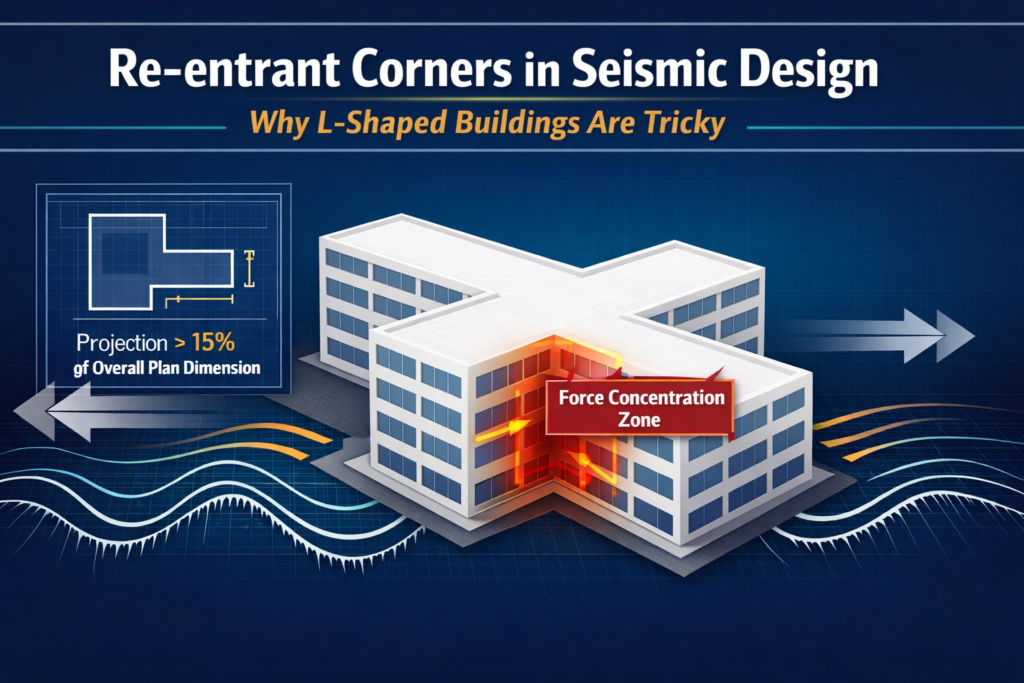
Re-entrant Corners in Seismic Design Explained

Re-entrant Corners in Seismic Design explained simply: learn why L-shaped buildings are vulnerable in earthquakes and how IS 1893 treats this plan irregularity.

Re-entrant Corners in Seismic Design Explained Read More »

Torsional Irregularity

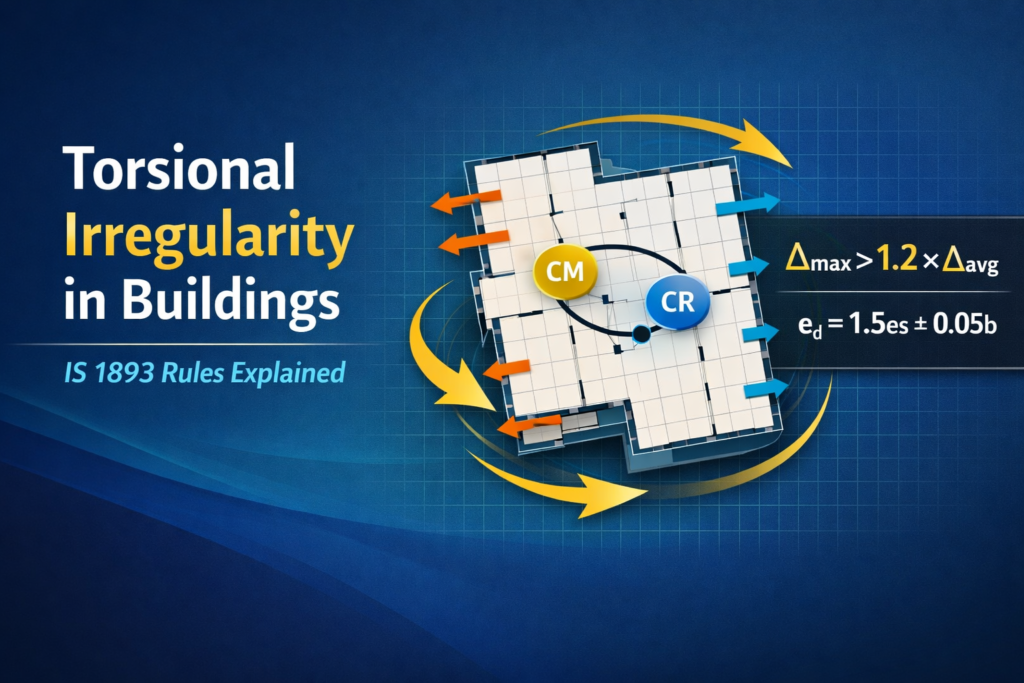
Torsional Irregularity in Buildings as per IS 1893

Torsional Irregularity in Buildings explained using IS 1893 Table 5 and Clause 7.8. Learn displacement checks, eccentricity rules, and design impact.

Torsional Irregularity in Buildings as per IS 1893 Read More »

Vertical Irregularities

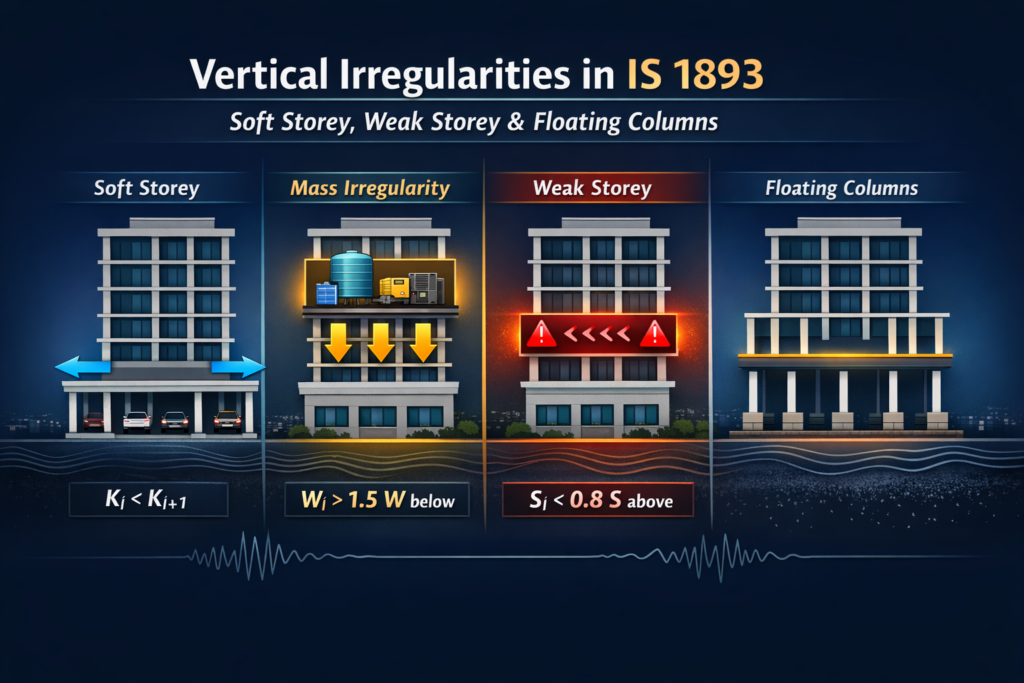
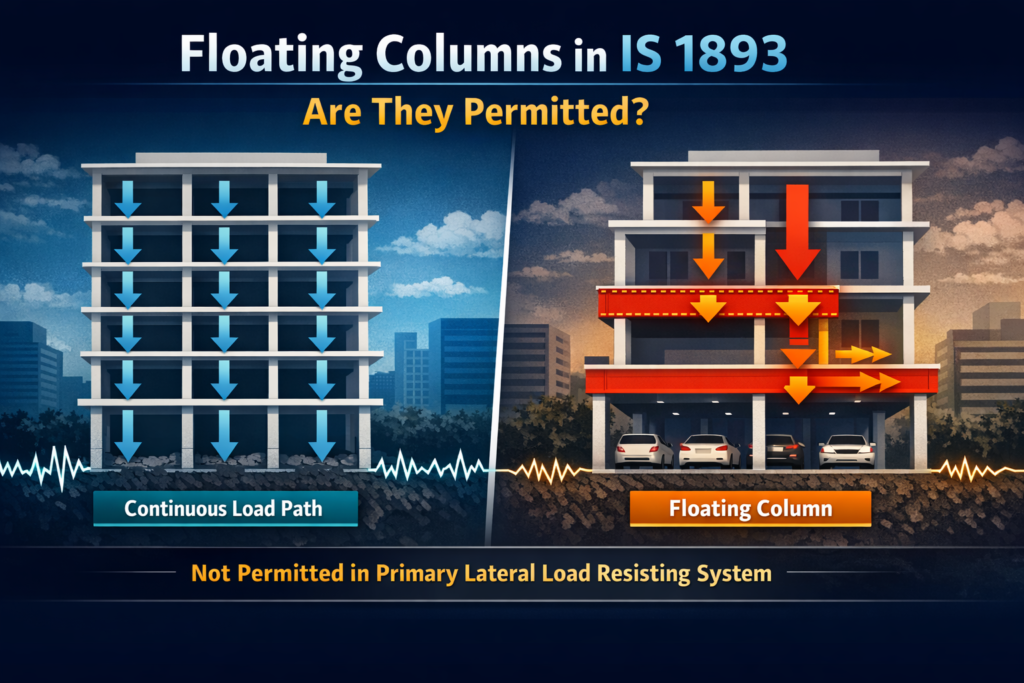
Vertical Irregularities in IS 1893 Explained

Vertical Irregularities in IS 1893 explained simply—soft storey, weak storey, mass irregularity and floating columns with amendment updates.

Vertical Irregularities in IS 1893 Explained Read More »

IS 1893

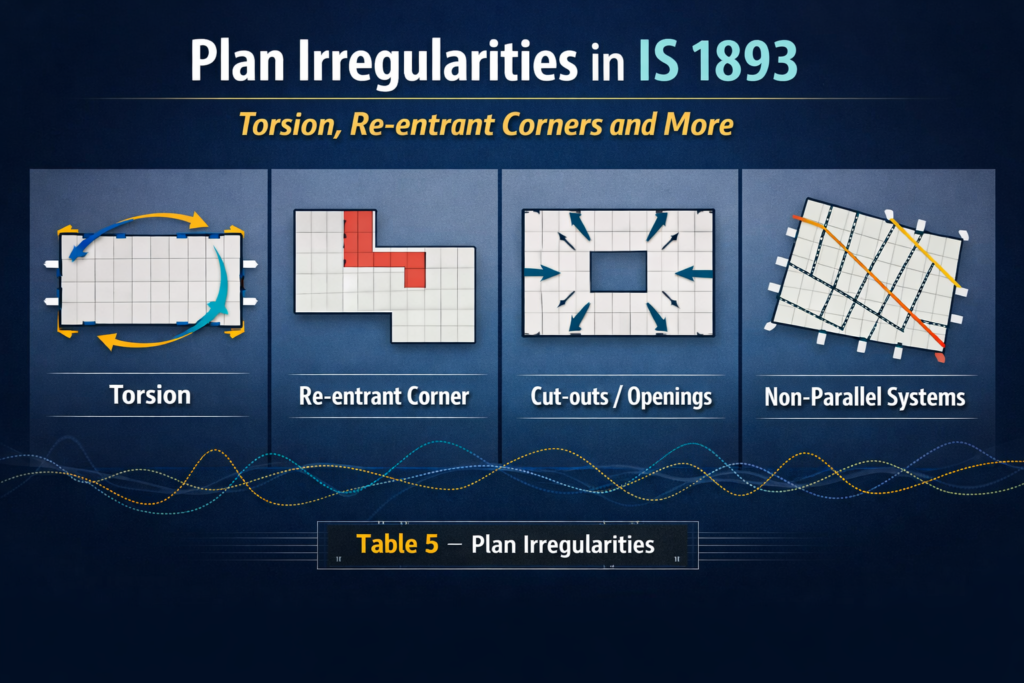
Plan Irregularities in IS 1893 Explained Clearly

Plan Irregularities in IS 1893 explained simply—learn torsion, re-entrant corners, cut-outs, and non-parallel systems using Table 5.

Plan Irregularities in IS 1893 Explained Clearly Read More »

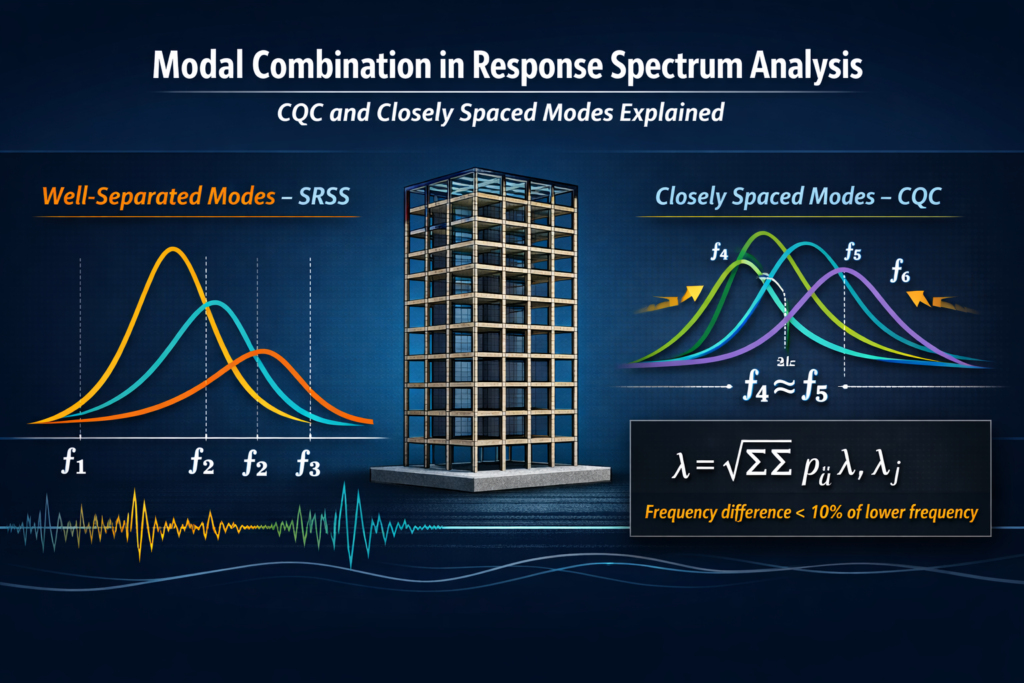
Modal Combination

Modal Combination in Response Spectrum Analysis Explained

Modal Combination in Response Spectrum Analysis explained simply—learn CQC, closely spaced modes, SRSS limits, and how IS 1893 treats modal response.

Modal Combination in Response Spectrum Analysis Explained Read More »

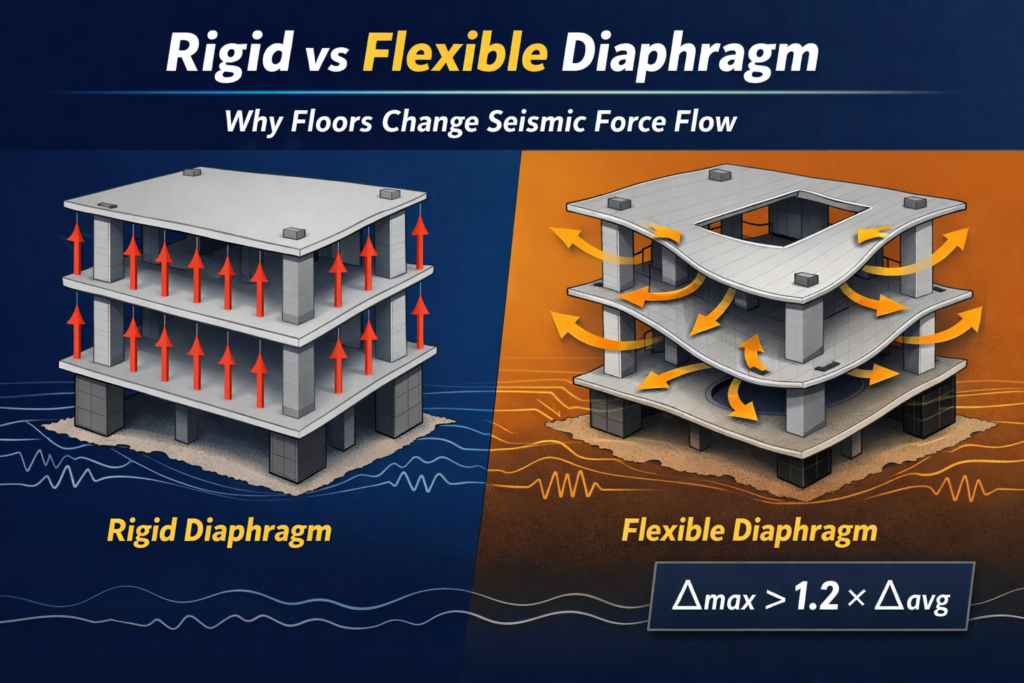
Rigid vs Flexible Diaphragm

Rigid vs Flexible Diaphragm in IS 1893 Explained

Rigid vs Flexible Diaphragm in IS 1893 explained simply—learn code rules, slab openings, force transfer, and why wrong diaphragm assumptions cause trouble.

Rigid vs Flexible Diaphragm in IS 1893 Explained Read More »

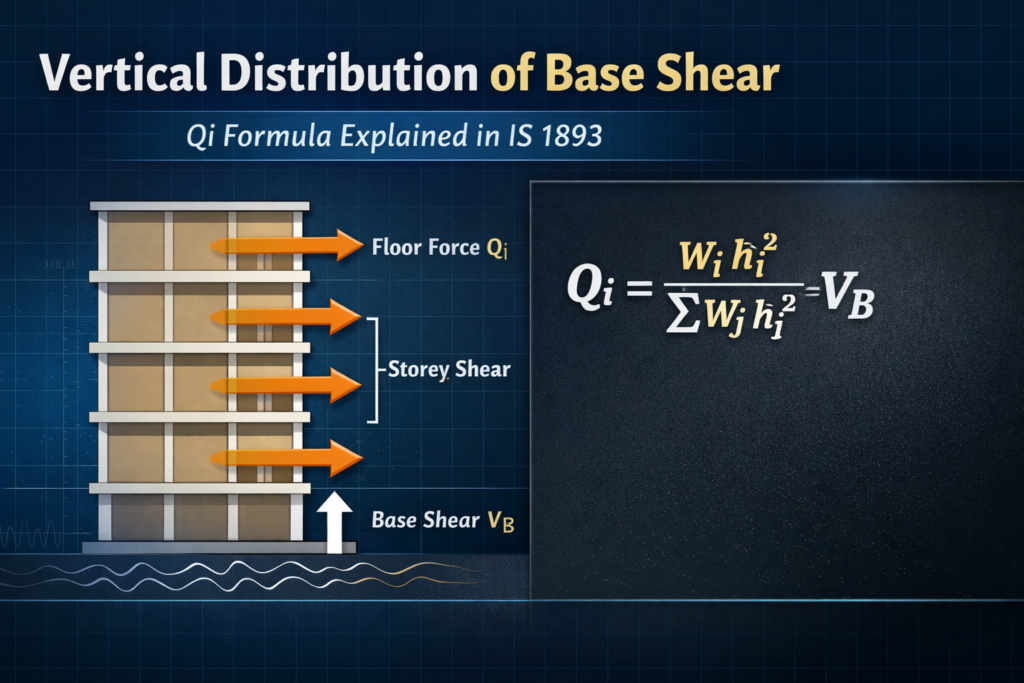
Vertical Distribution of Base Shear

Vertical Distribution of Base Shear in IS 1893

Vertical Distribution of Base Shear in IS 1893 explained simply—learn the Qi formula, floor force distribution, and storey shear with practical clarity.

Vertical Distribution of Base Shear in IS 1893 Read More »

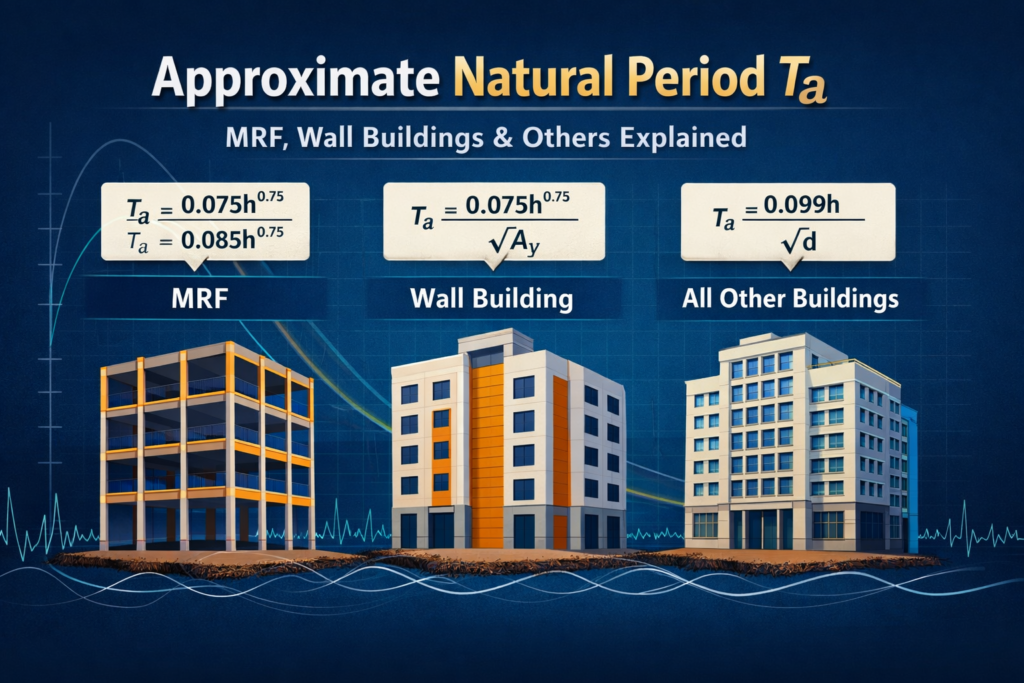
Approximate Natural Period

Approximate Natural Period Ta in IS 1893 Explained

Approximate Natural Period Ta in IS 1893 explained clearly for MRF, wall buildings, and all other buildings, with formulas, logic, and examples.

Approximate Natural Period Ta in IS 1893 Explained Read More »

Dynamic Analysis Method

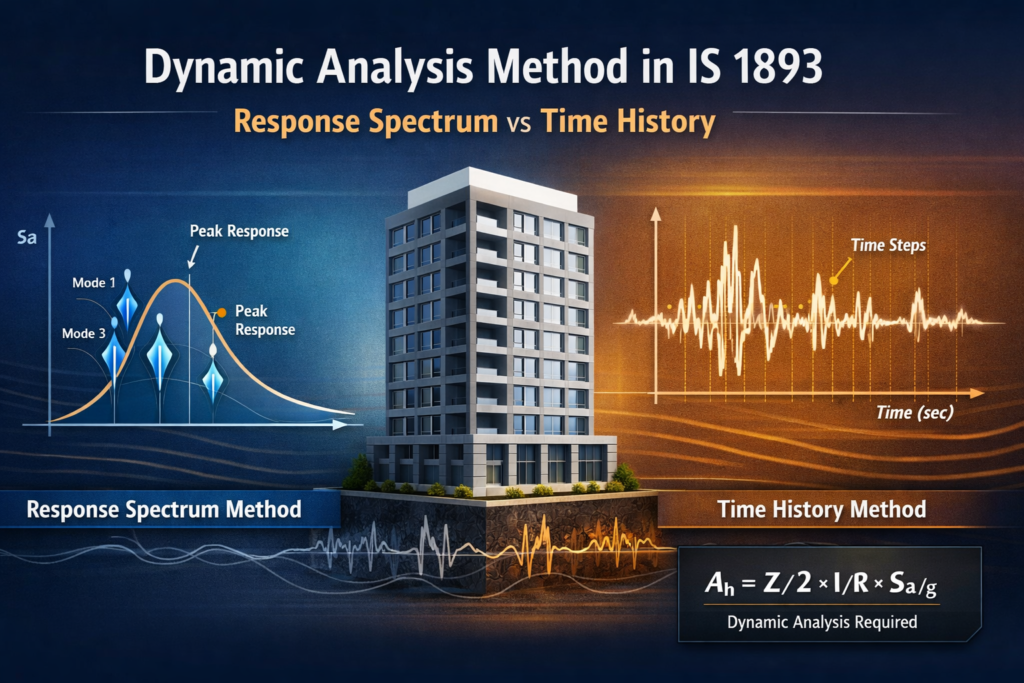
Dynamic Analysis Method in IS 1893 Explained

Dynamic Analysis Method in IS 1893 explained clearly: Response Spectrum vs Time History, code triggers, scaling rules, and practical design guidance.

Dynamic Analysis Method in IS 1893 Explained Read More »

Equivalent Static Method

Equivalent Static Method in IS 1893: When You Can Use It

Equivalent Static Method in IS 1893 explained simply—learn where it applies, when it does not, and why dynamic analysis becomes mandatory.

Equivalent Static Method in IS 1893: When You Can Use It Read More »

← Previous 1 2 3 … 16 Next →

Recent Posts

  • Ground-Supported vs Elevated Tanks in IS 1893 Part 2
  • Foundation Design in IS 1893: Key Seismic Rules
  • Design Eccentricity in IS 1893: 1.5es ± 0.05b
  • Storey Drift Limit in IS 1893: What 0.004h Means
  • Bare Frame Analysis in Seismic Design: Why Misleading?

Recent Comments

No comments to show.

🔗 Explore Now

👉 FIDIC Knowledge Base: wisdomwaveshub.com
📧 Email: info@wisdomwaveshub.com
📹 YouTube Channel: Growth Mindset Company

Copyright © Wisdom Waves Hub