Skip to content
  • Home
    • 👋 About Us
    • 🔒 Privacy Policy
    • Terms of Service (Applies to Pro & Basic Tools Only)
  • 🧠Engineering Corner
    • Contracts Corner📜
  • Membership Account
    • Log In
  • Membership Levels
  • Pro Tier
  • Basic Tier
  • Sample Reports
  • Home
    • 👋 About Us
    • 🔒 Privacy Policy
    • Terms of Service (Applies to Pro & Basic Tools Only)
  • 🧠Engineering Corner
    • Contracts Corner📜
  • Membership Account
    • Log In
  • Membership Levels
  • Pro Tier
  • Basic Tier
  • Sample Reports
Liquefaction

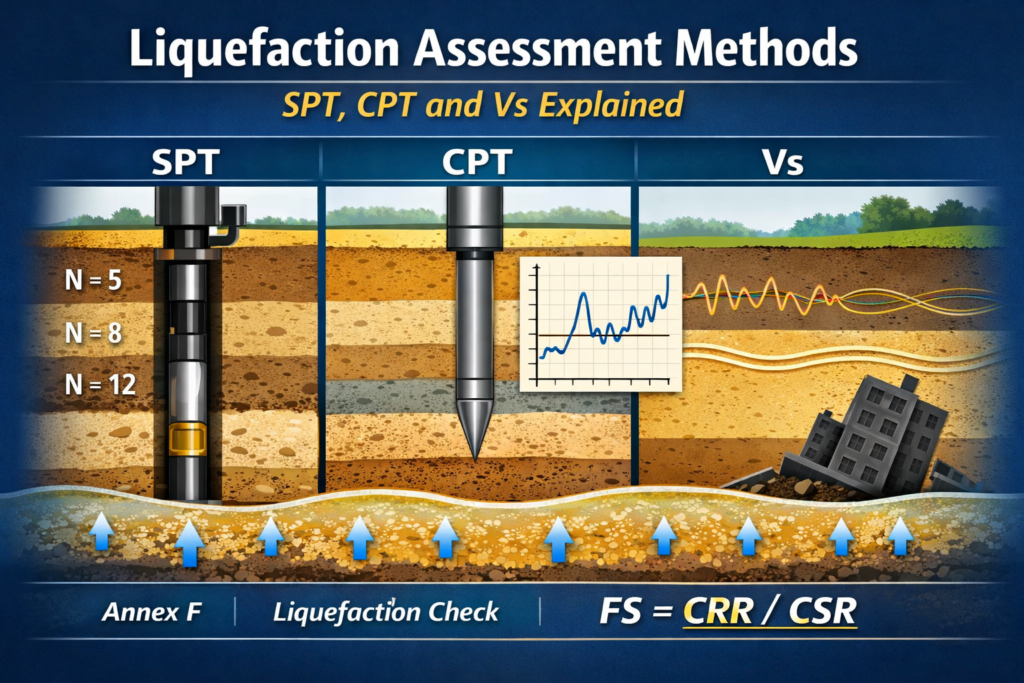
Liquefaction Assessment Methods: SPT, CPT and Vs

Liquefaction assessment methods using SPT, CPT and shear wave velocity explained simply, with Annex F formulas, charts and practical design guidance.

Liquefaction Assessment Methods: SPT, CPT and Vs Read More »

Liquefaction

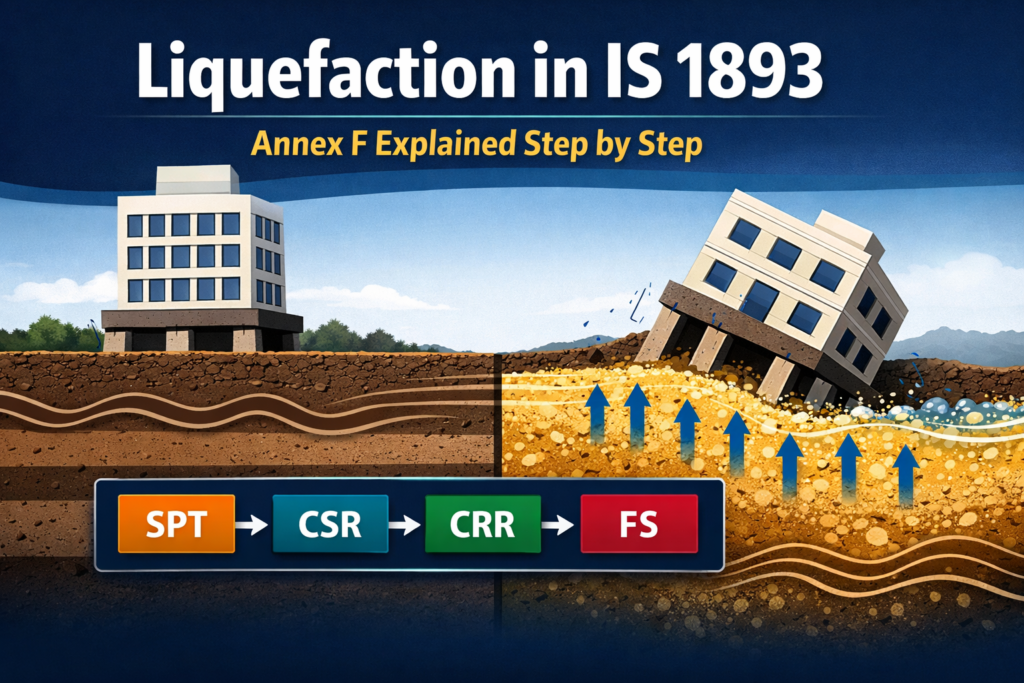
Liquefaction in IS 1893: Annex F Explained Step by Step

Liquefaction in IS 1893 explained clearly using Annex F. Learn the simplified step-by-step procedure, SPT logic, CSR, CRR, and FS checks.

Liquefaction in IS 1893: Annex F Explained Step by Step Read More »

Bearing Pressure

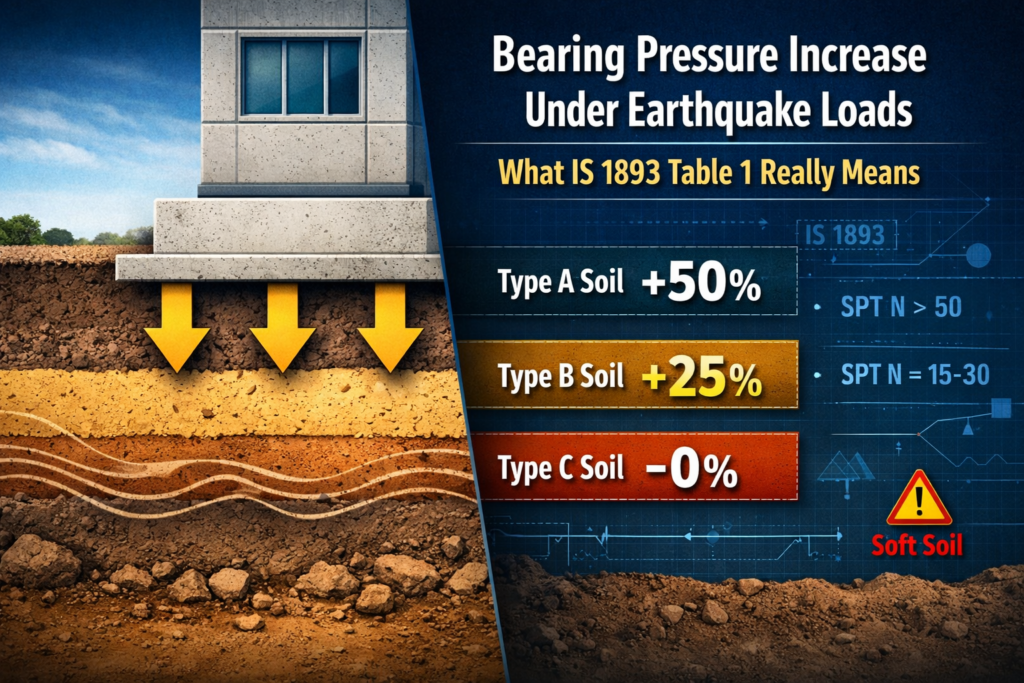
Bearing Pressure Increase Under Earthquake Loads Explained

Bearing Pressure Increase Under Earthquake Loads explained simply—what IS 1893 Table 1 really allows, when it applies, and the mistakes to avoid.

Bearing Pressure Increase Under Earthquake Loads Explained Read More »

IS 1893

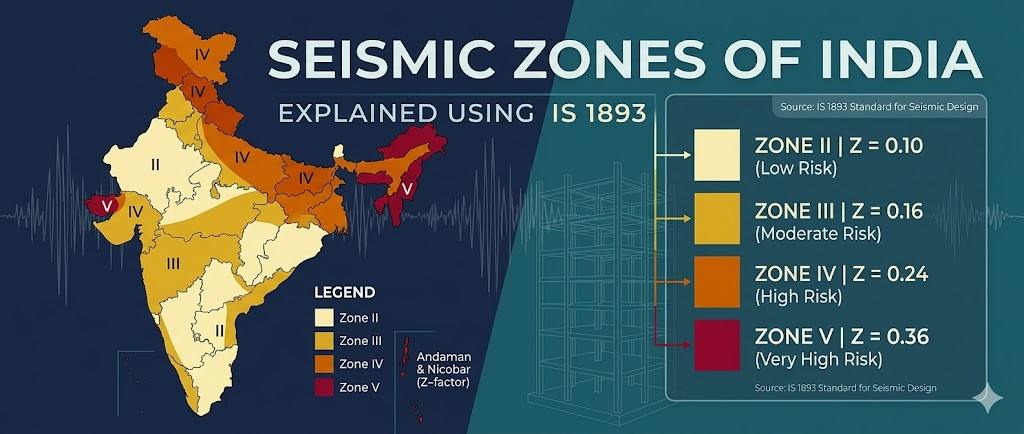
Seismic Zones of India Explained Using IS 1893

Seismic Zones of India Explained Using IS 1893: understand Zones II, III, IV and V, zone factor Z, and what each zone means for safer structural design.

Seismic Zones of India Explained Using IS 1893 Read More »

IS 1893

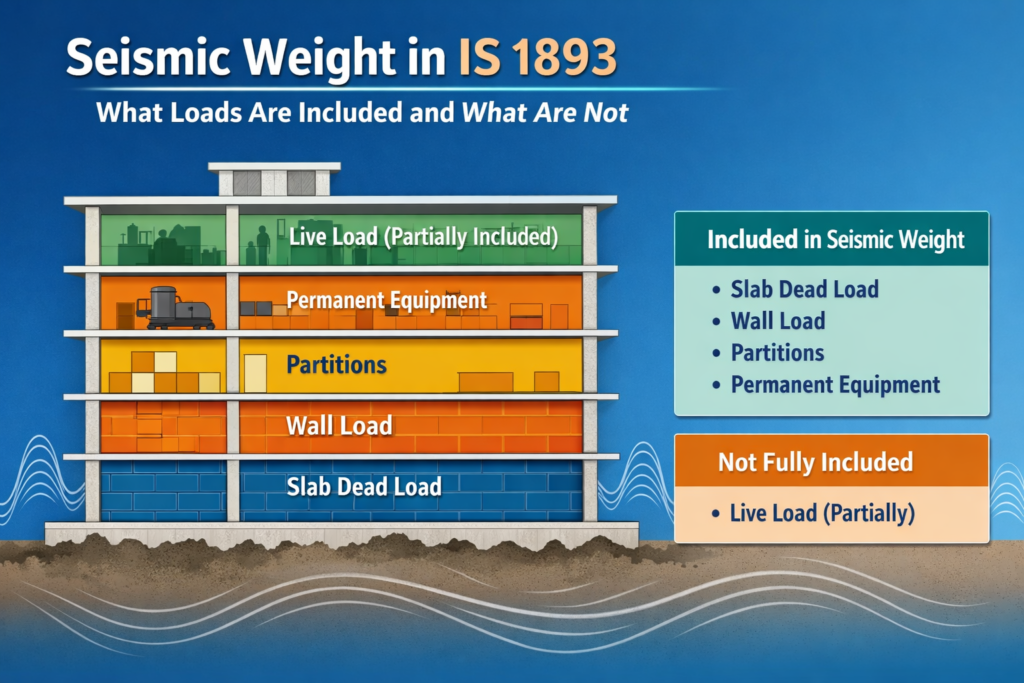
Seismic Weight in IS 1893: What Loads Are Included?

Seismic Weight in IS 1893 explained clearly: learn what loads are included, what are excluded, and how Clause 7.4 and Table 10 affect design.

Seismic Weight in IS 1893: What Loads Are Included? Read More »

IS 1893

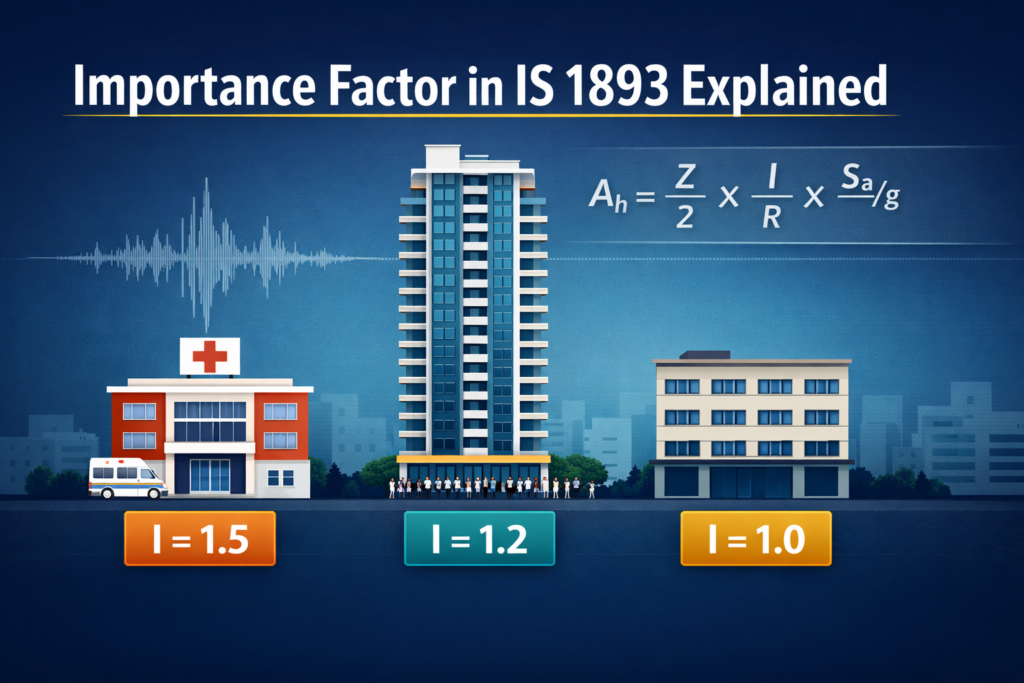
Importance Factor in IS 1893: Which Buildings Need It?

Importance Factor in IS 1893 explained simply: learn which buildings need 1.5, 1.2, or 1.0 and how this choice affects seismic design checks.

Importance Factor in IS 1893: Which Buildings Need It? Read More »

IS 1893

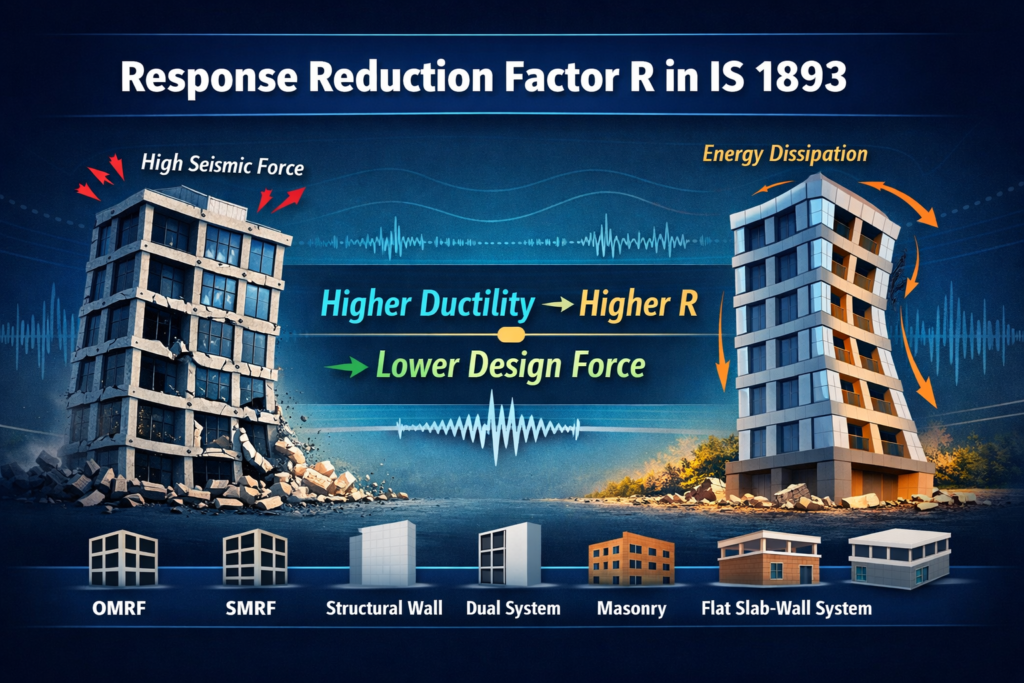
Response Reduction Factor R in IS 1893: Why It Cuts Force

Response Reduction Factor R in IS 1893 explains why ductile systems like SMRF, walls, and dual systems are designed for lower seismic force.

Response Reduction Factor R in IS 1893: Why It Cuts Force Read More »

IS 1893

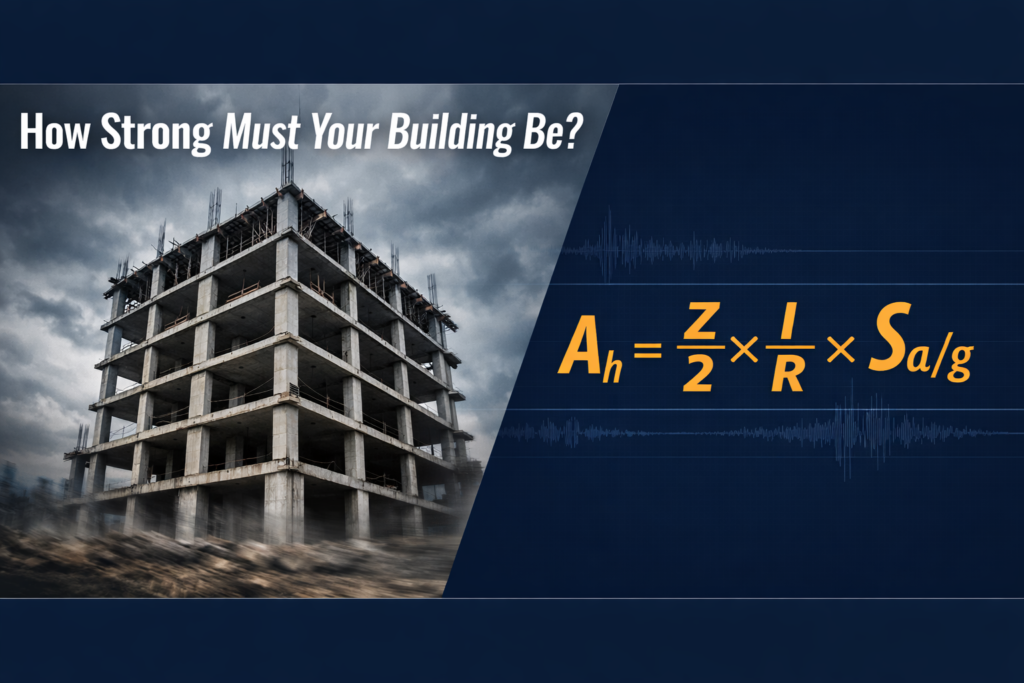
Seismic Coefficient Ah Formula Explained | IS 1893:2016

Seismic Coefficient Ah decoded: master the Z/2 × I/R × Sa/g formula from IS 1893:2016 with zone tables, R factors & an interactive calculator.

Seismic Coefficient Ah Formula Explained | IS 1893:2016 Read More »

IS 1893

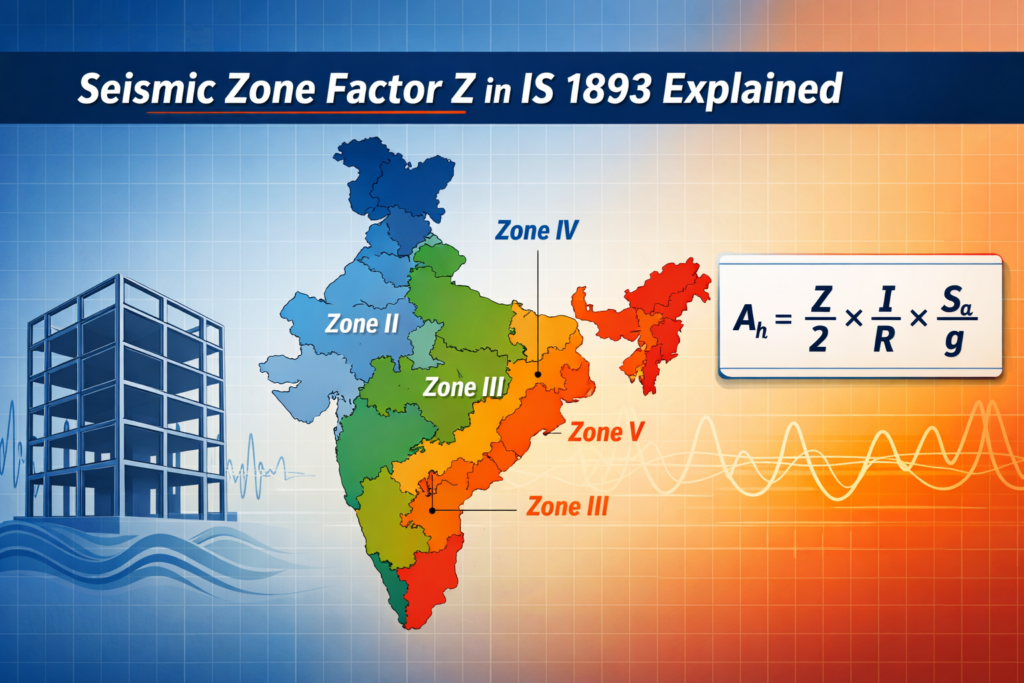
Seismic Zone Factor Z in IS 1893: Zones II to V Explained

Seismic Zone Factor Z in IS 1893 explained simply—learn Zone II, III, IV, V values and how Z affects the design horizontal acceleration coefficient.

Seismic Zone Factor Z in IS 1893: Zones II to V Explained Read More »

IS 1893

IS 1893 Part 1 2016 Explained: Scope, Parts & Applicability

IS 1893 Part 1 2016 Explained: learn the code scope, applicable structures, and how Part 1 connects with Parts 2 to 5 in simple student-friendly terms.

IS 1893 Part 1 2016 Explained: Scope, Parts & Applicability Read More »

← Previous 1 2 3 4 … 16 Next →

Recent Posts

  • Ground-Supported vs Elevated Tanks in IS 1893 Part 2
  • Foundation Design in IS 1893: Key Seismic Rules
  • Design Eccentricity in IS 1893: 1.5es ± 0.05b
  • Storey Drift Limit in IS 1893: What 0.004h Means
  • Bare Frame Analysis in Seismic Design: Why Misleading?

Recent Comments

No comments to show.

🔗 Explore Now

👉 FIDIC Knowledge Base: wisdomwaveshub.com
📧 Email: info@wisdomwaveshub.com
📹 YouTube Channel: Growth Mindset Company

Copyright © Wisdom Waves Hub