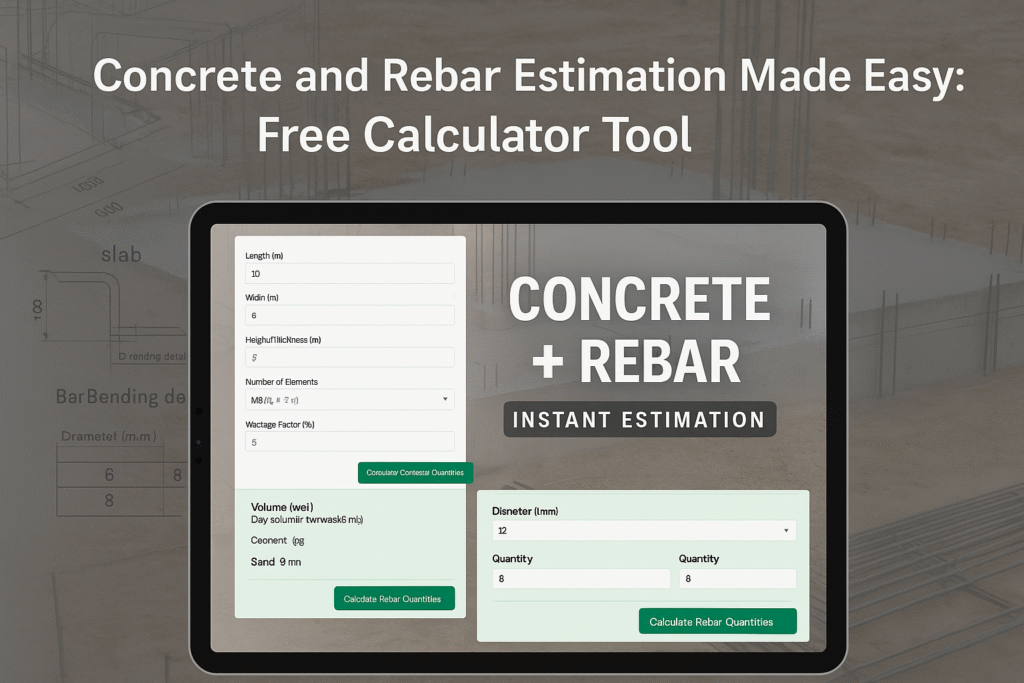
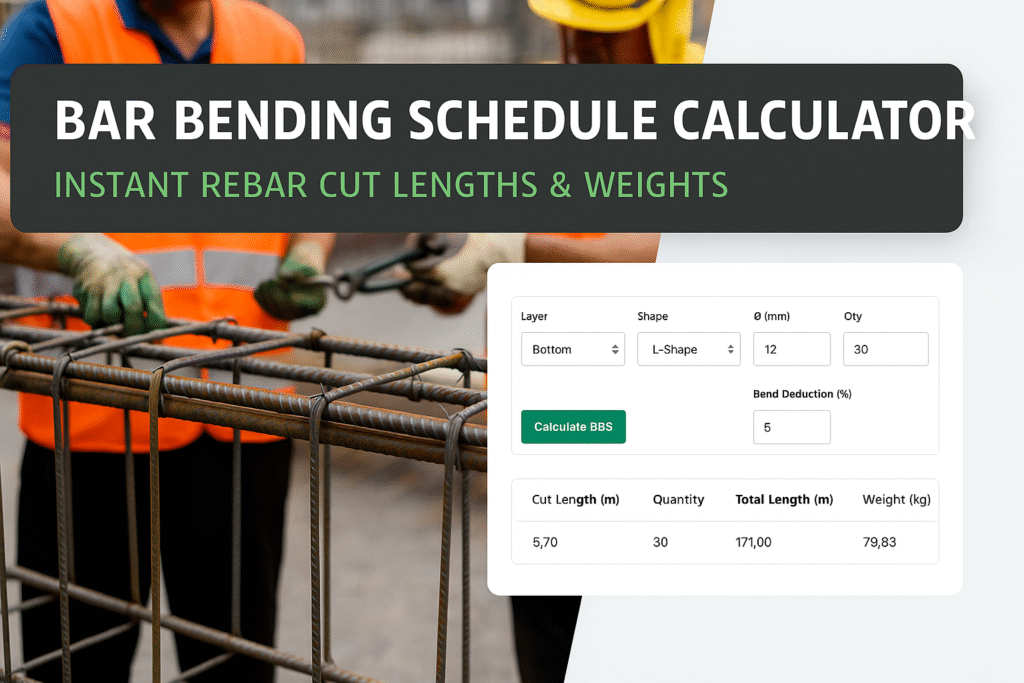
This guide explains what the Electrical Load Calculator (NEC / BS 7671 / IS 732) does, how its logic works, how to use it effectively, and how to read the outputs (kW, kVA, service amps, transformer size, and energy cost). You also get a complete sample project with step-by-step math and a jargon buster.
What this calculator is for
It estimates a building’s maximum demand and service sizing using code-based rules of thumb and diversity factors. In a few clicks you can:
How it works (under the hood)
Behind the scenes the calculator applies well-known rules from the standards:
- General lighting load uses unit loads by occupancy (e.g., 3 VA/ft² for dwellings) from NEC Table 220.12. :contentReference[oaicite:0]{index=0}
- Dwelling lighting + small-appliance + laundry circuits get the Table 220.42 demand: first 3,000 VA @ 100%, remainder up to 120 kVA @ 35%, and any remainder @ 25%. :contentReference[oaicite:1]{index=1}
- Non-dwelling receptacles may use 220.44: first 10 kVA @ 100%, remainder @ 50%. :contentReference[oaicite:2]{index=2}
- Household ranges use NEC Table 220.55 (e.g., a single ≤12 kW range → 8 kW per Col. C; larger ratings follow the table notes). :contentReference[oaicite:3]{index=3}
- Clothes dryers follow 220.54 (minimum 5 kW each, with demand factors when ≥5 dryers). :contentReference[oaicite:4]{index=4}
- Non-coincident loads (heating vs cooling): use the larger for service calcs (per 220.60). :contentReference[oaicite:5]{index=5}
- Motors: add 25% of the largest motor (NEC 430.24) to the group. :contentReference[oaicite:6]{index=6}
- UK BS 7671: diversity values are guidance (via the IET On-Site Guide, Appendix A) rather than prescriptive code numbers—confirm for your project. :contentReference[oaicite:7]{index=7}
- India IS 732:2019: wiring design & maximum demand are covered in this code of practice (see BIS text for scope and definitions). :contentReference[oaicite:8]{index=8}
Formulas used (readable math)
Lighting VA = Area(ft²) × VA/ft². 1 m² = 10.7639 ft²
Service current: I1φ = (kVA × 1000) / V, I3φ = (kVA × 1000) / (√3 × V)
Energy (monthly) ≈ kW × hours/day × days/month × load factor
How to use the calculator
- Pick your Standard and Region. This sets default logic (NEC vs BS 7671 / IS 732) and currency for cost.
- Choose unit system (SI or Imperial). Areas may be in m² or ft²—conversion happens on the fly.
- Enter supply (1-phase or 3-phase and voltage), then set usage assumptions (hours/day, days/month, load factor) plus optional spare capacity %.
- Add “Segments” (rooms/areas). For dwellings, enter quantities of Small-Appliance (1,500 VA each, min 2) and Laundry (1,500 VA) circuits. :contentReference[oaicite:10]{index=10}
- Enter fixed loads (ranges, dryers, HVAC, motors, other loads). The tool applies the relevant demand factors and the 25% largest-motor adder automatically. :contentReference[oaicite:11]{index=11}
- Review KPIs and the segment table. Use Reverse mode if you have a target kVA and want to see how much the lighting block would need to scale to meet it.
- Export report (HTML) for record keeping and markups.
Sample project (fully worked): 2BHK Flat — India (IS 732 path)
Preset values mirrored from the app. Where NEC methods are cited (e.g., dwelling general lighting calculation), they are used as a transparent reference for the demand logic; always confirm with IS 732 design practice for your submission.
- Living + Dining: 38 m², HVAC cool 3.5 kW, other fixed 0.6 kW
- Bedrooms: 28 m², HVAC cool 2.0 kW, other fixed 0.2 kW
- Kitchen: 12 m², range count 1 @ 12 kW, motors 0.2 kW (largest motor 0.2 kW), other fixed 2.5 kW
- Dwelling circuits: 2 small-appliance (1,500 VA each) + 1 laundry (1,500 VA)
- Supply: 1-phase, 230 V; Usage: 6 h/day, 30 days/month, load factor 0.45; Spare capacity: 20%
- Tariff example: ₹7.00/kWh (editable)
- General lighting unit load for dwellings: 3 VA/ft². :contentReference[oaicite:12]{index=12}
- Apply dwelling demand (Table 220.42) to lighting + small-appliance + laundry. :contentReference[oaicite:13]{index=13}
- IS/BS path for HVAC: diversity default ≈ 60% of (heat+cool) in this tool; edit if your spec requires.
- Motors: add 25% of the largest motor to the group. :contentReference[oaicite:14]{index=14}
Step-by-step calculations (simple English)
| Segment | Area (m²) | Area (ft²) | Lighting VA (3 VA/ft²) |
|---|---|---|---|
| Living + Dining | 38.00 | 409.03 | 1,227.08 |
| Bedrooms | 28.00 | 301.39 | 904.17 |
| Kitchen | 12.00 | 129.17 | 387.50 |
| Total lighting VA | 2,518.75 | ||
| Load | Rule | Demand (kW) |
|---|---|---|
| Range (1 × 12 kW) | IS/BS path default: ~80% diversity (tool default) | 9.60 |
| HVAC (cooling total 3.5 + 2.0 kW) | IS/BS path default: ~60% of (heat+cool) | 3.30 |
| Motors total | Sum of motors | 0.20 |
| Largest motor adder | +25% of largest motor (0.2 kW) :contentReference[oaicite:16]{index=16} | 0.05 |
| Other fixed loads | As entered (0.6 + 0.2 + 2.5) | 3.30 |
| Dwelling block (from above) | 4,406.56 VA → 4.4066 kW | 4.41 |
| Base demand (kW) | 20.8566 | |
Notes: If you switch the standard to NEC, a single ≤12 kW range would be taken as 8 kW via Table 220.55 Col. C; HVAC would use the larger of heat or cool (non-coincident), and receptacles (non-dwelling) could apply 220.44 (first 10 kVA @100%, remainder @50%). :contentReference[oaicite:17]{index=17}
Understanding the outputs
The segment table shows where the load comes from, and the bar chart visualizes which rooms/equipment dominate. Use this to focus efficiency upgrades (e.g., HVAC, cooking, motors).
Jargon buster
- Demand factor: A multiplier lower than 1.0 that recognizes not all connected loads run together at full power.
- Diversity: Engineering judgement about likely simultaneity of loads; in BS 7671 the IET On-Site Guide offers guidance, not fixed code rules. :contentReference[oaicite:18]{index=18}
- Load factor: Average vs peak usage (0–1). Used here to estimate energy (kWh) from peak demand (kW).
- Non-coincident loads: Two loads that don’t operate at the same time (e.g., heating vs cooling). Use the larger. :contentReference[oaicite:19]{index=19}
- Largest motor adder: Add 25% of the largest motor to feeders/services with multiple motors (NEC 430.24). :contentReference[oaicite:20]{index=20}
Pro tips
- Use the Presets as starting points, then tweak areas and fixed loads.
- When in doubt, keep diversity conservative; you can optimize later once the utility/DNO confirms capacity.
- Cross-check tariff against official sources: EIA (U.S.), Ofgem (U.K.), and state DISCOM/CEA publications (India). :contentReference[oaicite:21]{index=21}
Methodology & Citations (tap to toggle)
NEC Table 220.12 (3 VA/ft² dwellings; unit loads by occupancy) :contentReference[oaicite:22]{index=22}
NEC Table 220.42 (dwelling lighting + small-appliance + laundry: 3 kVA @100%, remainder @35%, >120 kVA @25%) :contentReference[oaicite:23]{index=23}
NEC 220.44 (non-dwelling receptacles: first 10 kVA @100%, remainder @50%) :contentReference[oaicite:24]{index=24}
NEC Table 220.55 (range demand; Col. C; notes for >12 kW) :contentReference[oaicite:25]{index=25}
NEC 220.54 (dryers: ≥5 kW each; demand factors when ≥5 dryers) :contentReference[oaicite:26]{index=26}
NEC 220.60 (non-coincident loads: use the larger) :contentReference[oaicite:27]{index=27}
NEC 430.24 (125% of largest motor) :contentReference[oaicite:28]{index=28}
IET On-Site Guide (BS 7671) — diversity is guidance :contentReference[oaicite:29]{index=29}
IS 732:2019 — Code of Practice for Electrical Wiring Installations :contentReference[oaicite:30]{index=30}
Energy price references: U.S. EIA, Ofgem GB cap, CEA tariff compendium :contentReference[oaicite:31]{index=31}
Quick answers
- Can I switch units mid-way? Yes—areas and power values update instantly.
- Can I segment by circuits instead of rooms? Yes—rename segments to “SA Circuits,” “Laundry,” “AC outdoor,” etc.
- What if my supplier bills tiered tariffs? Use a blended average for planning, then refine during detailed design.
Shadow-isolated UI • Mobile-first • Print-ready report export